Night Windows Brings an Invented Harbor at Dusk Above a Living Room Sofa
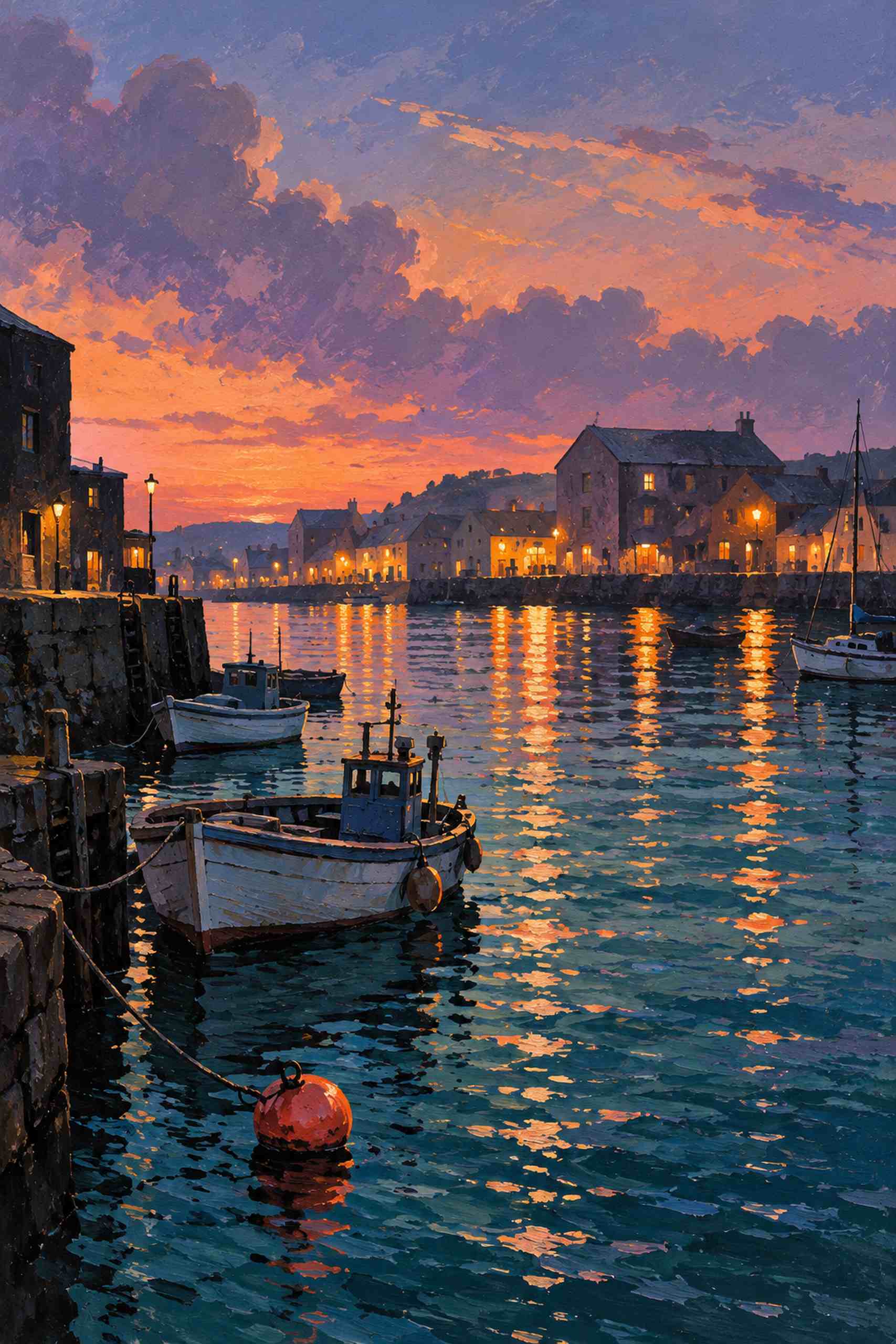
A harbor at dusk gives a room two kinds of light: the last cool color in the sky and the warmer marks that begin appearing along the water. Night Windows 02 builds its composition around that overlap. Small boats and dark quay shapes supply the setting, but the reflections carry much of the movement. It is an invented waterfront painting, with no destination name or landmark to turn it into a travel claim. Above a sofa, the scene offers depth without needing a window behind the wall.
The palette is more open than the narrow rainy street of Night Windows 01. Teal-blue water occupies a broader foreground, while the sky allows softer lavender intervals above the darker waterfront. Amber windows make a broken line between them. The warm marks extend into the water in longer, less certain shapes, and a small coral buoy gives the lower part of the image a local point of color. The painting does not need every mooring line or building edge to be equally distinct. Much of its atmosphere depends on deciding which details can recede.
The living-room concept sets that scene above a low blue sofa. A rust-colored cushion introduces warmth without trying to reproduce an entire harbor palette in the upholstery. Walnut on the small table and frame gives the room another material to look at, and a shaded lamp keeps the evening arrangement ordinary and usable. There are no model boats, rope details or nautical signs. The picture already supplies the waterfront. I would rather let the furniture remain a place to sit than ask it to explain the subject a second time.
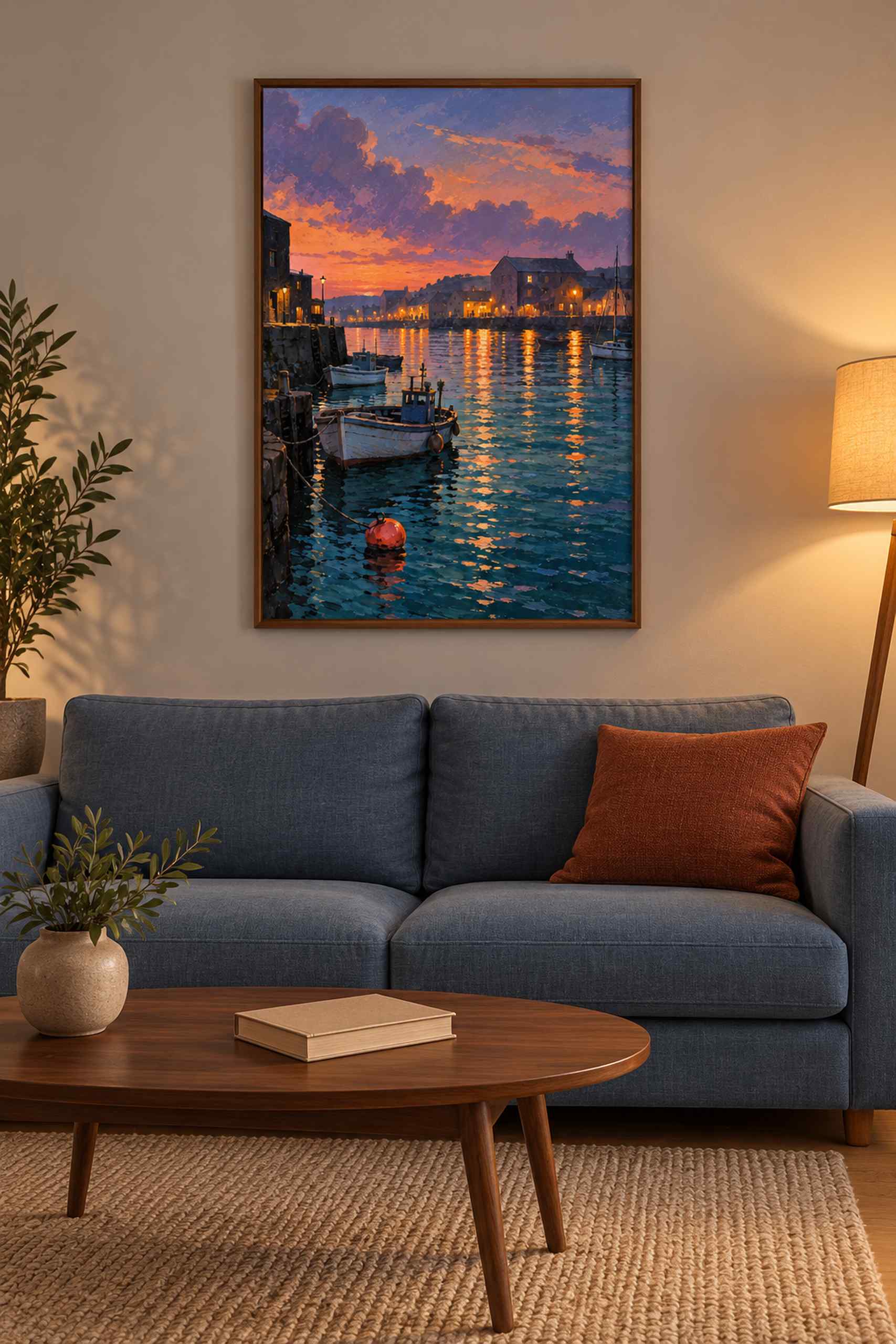
A portrait composition above a sofa can be useful precisely because it does not stretch across the whole furniture width. The open wall to either side becomes part of the arrangement. That can feel lighter than filling the available space with a long row of small frames. In this image, the water and distant buildings lead the eye into the poster’s height. Cropping it into a broad horizontal shape to fit a familiar sofa-wall formula would change that route through the scene. Preserve the composition first, then choose a frame and position that suit the available wall.
The frame’s warmth is a choice rather than a requirement. Walnut relates to the room’s smaller furniture and provides a distinct boundary around the cooler painting. A thin black edge would connect more directly to the dark quay silhouettes; a lighter wood would make the perimeter less emphatic. Before deciding, look at the print from the doorway as well as from the sofa. The frame may be more noticeable on entering the room, while the painted reflections are what you spend time with once seated. A successful arrangement can accommodate both distances without making every detail equally loud.
I would test the outside frame footprint with a paper template and include the normal height of cushions, throws and any nearby lamp. The AI-generated room view proposes a relationship, rather than supplying measurements for a particular sofa. Keep the picture comfortably clear of everyday movement around the seating. There is also value in looking at the proposed glazing position when the evening lamp is on. A reflected bright patch can hide the warm windows inside the image, which rather defeats the reason for choosing this scene. A physical sample under the actual light will reveal more about the printed blue than a screen preview can.
Night Windows 02 broadens the collection from enclosed street atmosphere to a more expansive waterside view. It still concerns the meeting of cool surroundings and small warm lights, but it gives that idea a different pace. The harbor can be busy with marks while the room stays simple. I would keep the side table useful, leave the rust cushion as the main warm accent and allow the boats to remain inside the frame. A living room does not need to become a departure lounge for an imaginary voyage. Sometimes a distant line of lit windows above the sofa is quite enough.