Quiet Signals Uses a Terracotta Curve on a Bedroom Wall
A curve can give a bedroom wall direction without turning the picture into a scene. Quiet Signals 03 begins with a broad terracotta ribbon, a softer sage area and a dark olive corner. There is enough resemblance to a bend in a river for that thought to occur, but the work leaves the interpretation open. It is an abstraction built from color and placement, not a map with the labels removed. The pale area around the larger forms is doing as much compositional work as the curve itself.
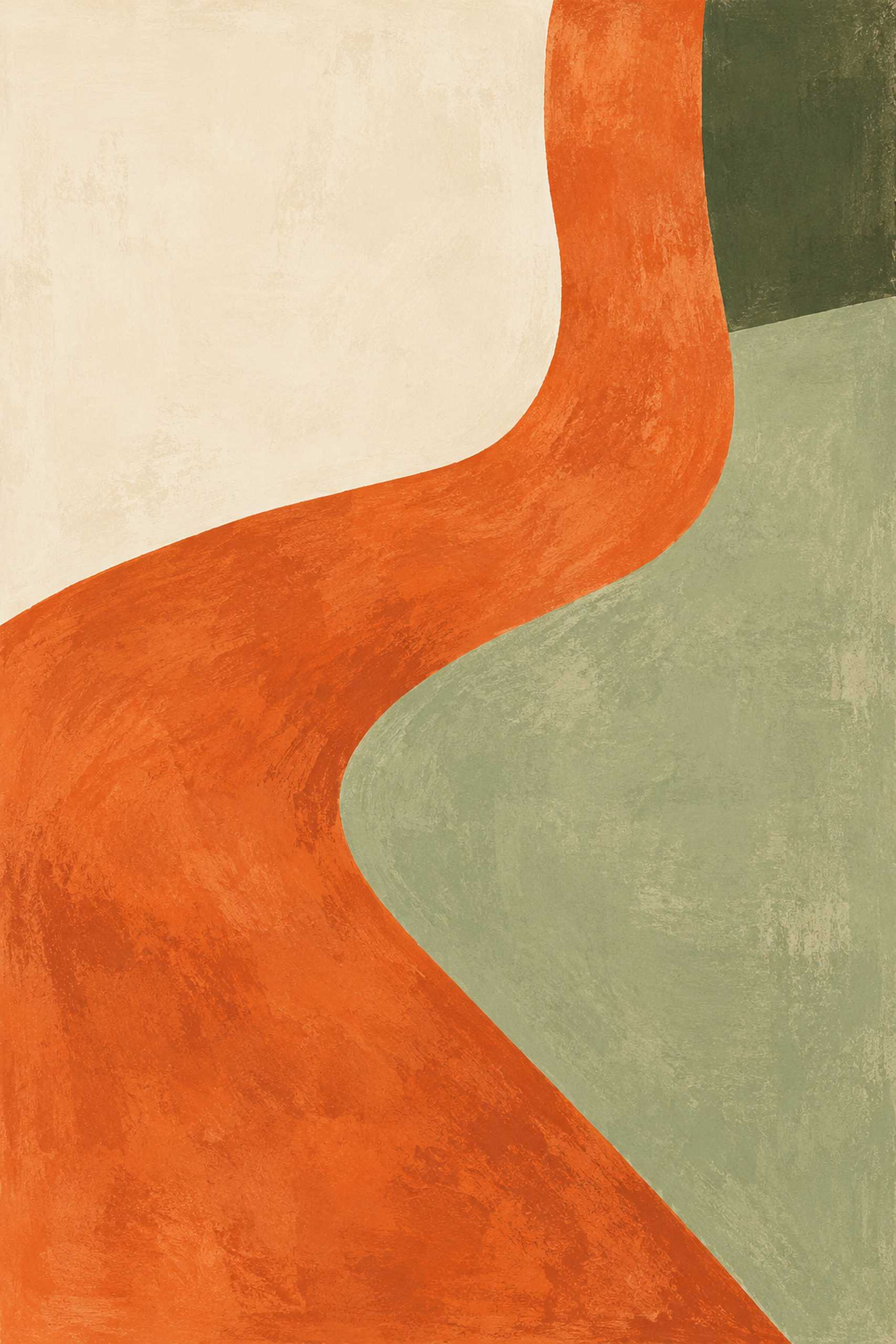
Terracotta supplies the main weight and movement. Its path bends across the field rather than sitting squarely in the middle, while the sage introduces a different kind of edge, softer and less emphatic. The olive area at the upper edge provides a firmer angular interruption beside the longer curve. I like that difference in character: the broad ribbon can move across the paper while the darker corner supplies a more decisive stop. The surface has a matte, dry-brush-like character, enough variation to reward a closer look without making every part equally busy.
This is a new numbered work in the collection. Quiet Signals 01 uses a split circle, a dark bar and a red dot; Quiet Signals 02 turns open space into a desert horizon. The third work keeps the interest in unequal intervals and limited color, but allows a curve to do more of the organizing. That is a more useful continuity than repeating the same circle indefinitely. The collection can have a recognizable pace while letting its individual pictures behave differently. Here, the lighter field also gives nearby furniture room to show its grain and edges, instead of treating the wall as a continuous band of color.
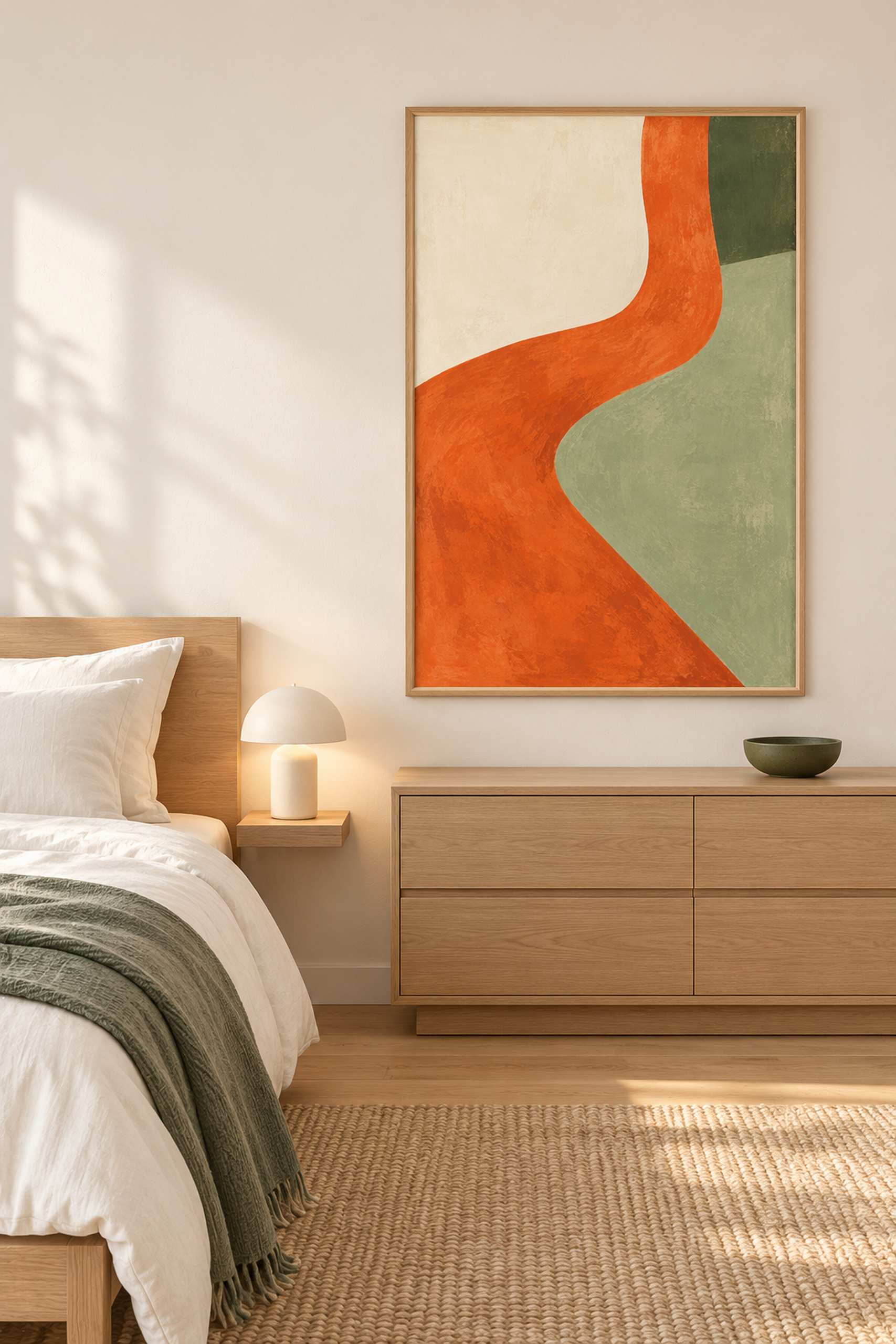
In the bedroom concept, pale oak furniture and white bedding give the terracotta somewhere clear to register. A sage textile provides a limited connection to the cooler field, and the small dark bowl is a quieter material counterpart to the olive area. The picture sits above a dresser beside the bed rather than directly above the pillows. That arrangement gives it a wall of its own and leaves the sleeping surface comparatively plain. It also makes the image visible from another part of the room, instead of treating it mainly as a decorative badge for the headboard.
The natural wood frame joins the furniture without introducing a sharp new border color. A narrow dark frame would give the abstraction more independence; white would make the pale field feel closer to the surrounding wall. These are different interpretations rather than stages of improvement. I would begin with the border that already has a useful material relationship in the room, then judge whether the picture needs a stronger edge. The terracotta is quite capable of being the warm focal point without help from an equally assertive frame.
Try a 40 by 60 centimeter image area as one planning example, adding the real frame dimensions before making a paper template. Check it from the bedroom doorway and from the position where you normally see the dresser. The numbers are proposed examples, not measurements of the AI-generated scene. If a lamp or everyday storage sits on the dresser, include it in the test instead of assuming the top will remain clear. A curve that looks beautifully balanced over an empty surface can lose its lower portion behind a lamp you have no intention of moving.
The artwork is an original AI-assisted digital composition. Its printed colors and apparent paper texture still need to be judged through a physical sample under the room’s own light. I would keep the surrounding repetitions modest: one sage textile may be enough, and the wood can remain wood rather than an attempt to match the terracotta exactly. The image does not need a claimed calming effect to justify its place in a bedroom. It offers a broad, legible movement on an otherwise quiet wall, with a firmer olive corner that keeps the arrangement from becoming too polite.